False Ceiling Designs: Styles, Benefits & Ideas
A false ceiling does far more than hide wiring — it shapes a room's lighting, acoustics and whole atmosphere. Here's what to know before you design one.
Gypsum vs POP
Gypsum board ceilings are clean, quick to install and give a smooth finish. POP (plaster of Paris) allows more intricate, custom shapes. Both are popular; the right choice depends on your design and budget.
Popular styles
There's a ceiling design for every room and taste:
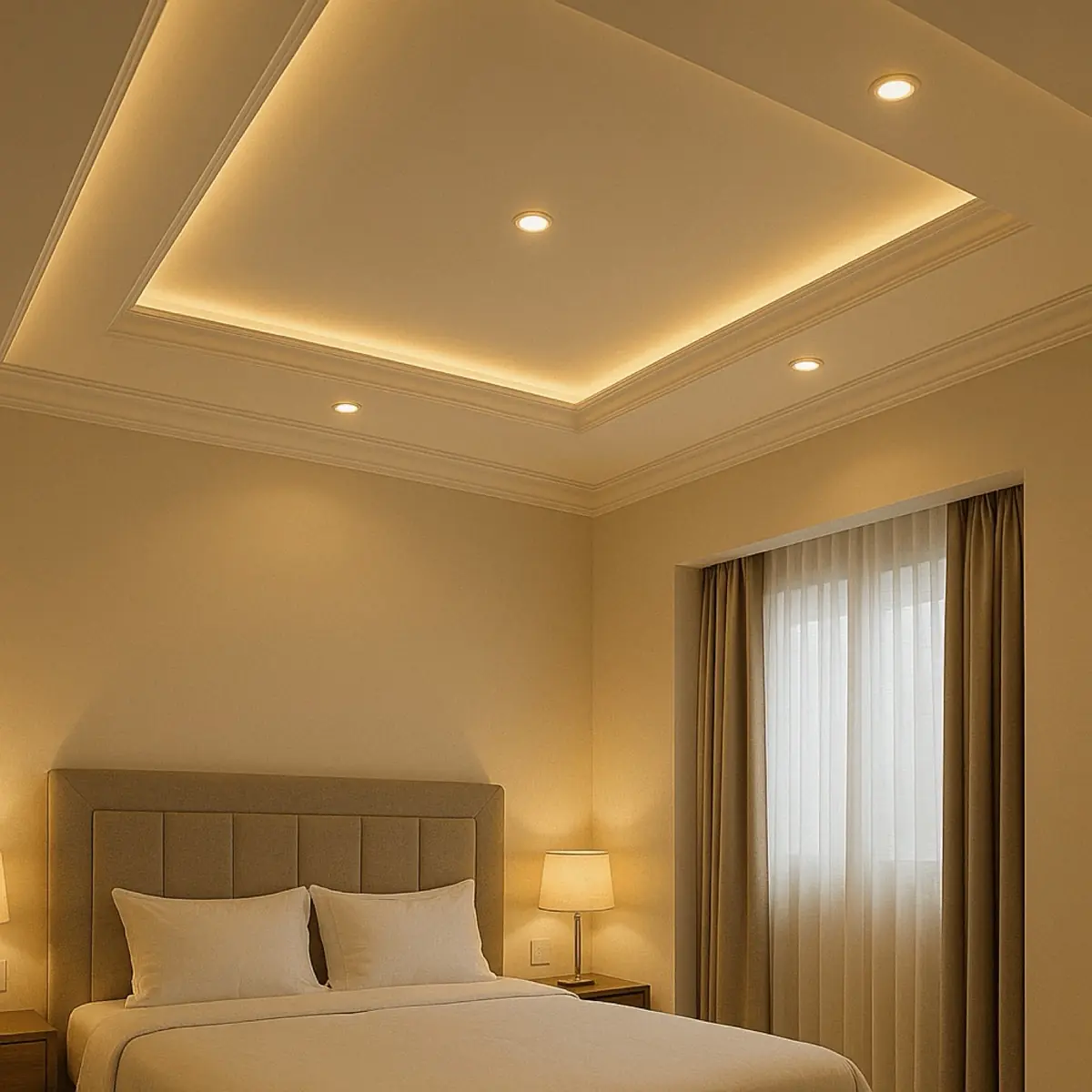
- Cove ceilings with concealed lighting
- Tray (single or multi-level) designs
- Wooden or panelled ceilings for warmth
- Minimal peripheral designs for compact rooms
Start with your ceiling height, not the design
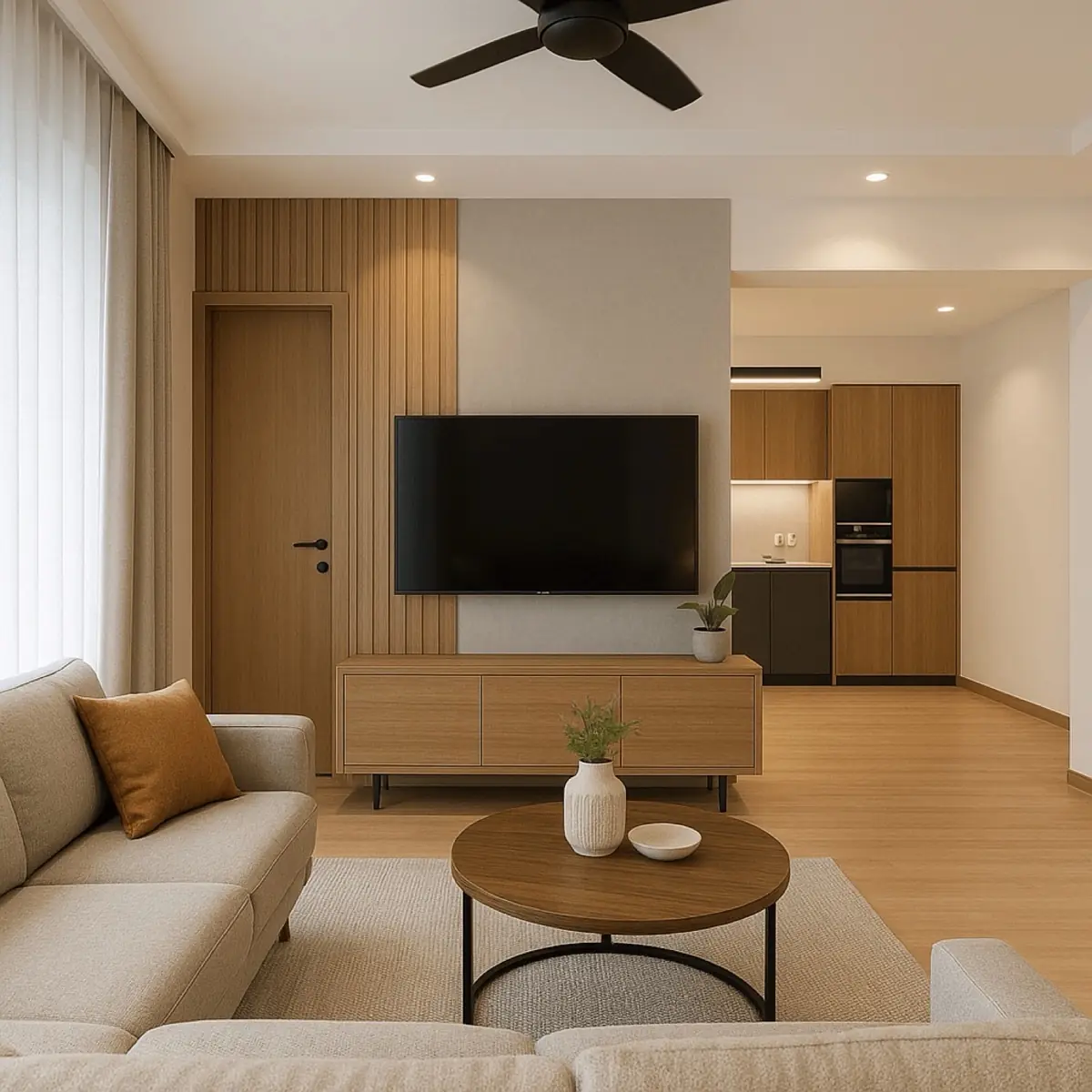
This is the step most people skip, and it's the one that decides whether a ceiling looks elegant or oppressive. Measure floor to slab before you fall in love with a reference image. A full box ceiling drops the room by roughly six to nine inches once the framework and boards are in; a peripheral or cove design only drops the edges and leaves the centre at full height. Most flats built in and around Tirupati sit at nine to ten feet, which comfortably takes a layered design. If you're closer to eight and a half feet, keep the drop to the perimeter and let the middle breathe. A low room with a heavy multi-level ceiling feels smaller the moment you walk in, no matter how good the lighting is.
Room by room: what actually suits each space
A ceiling is not a single decision you make once for the whole home. Each room is used differently, and the design should follow the use.
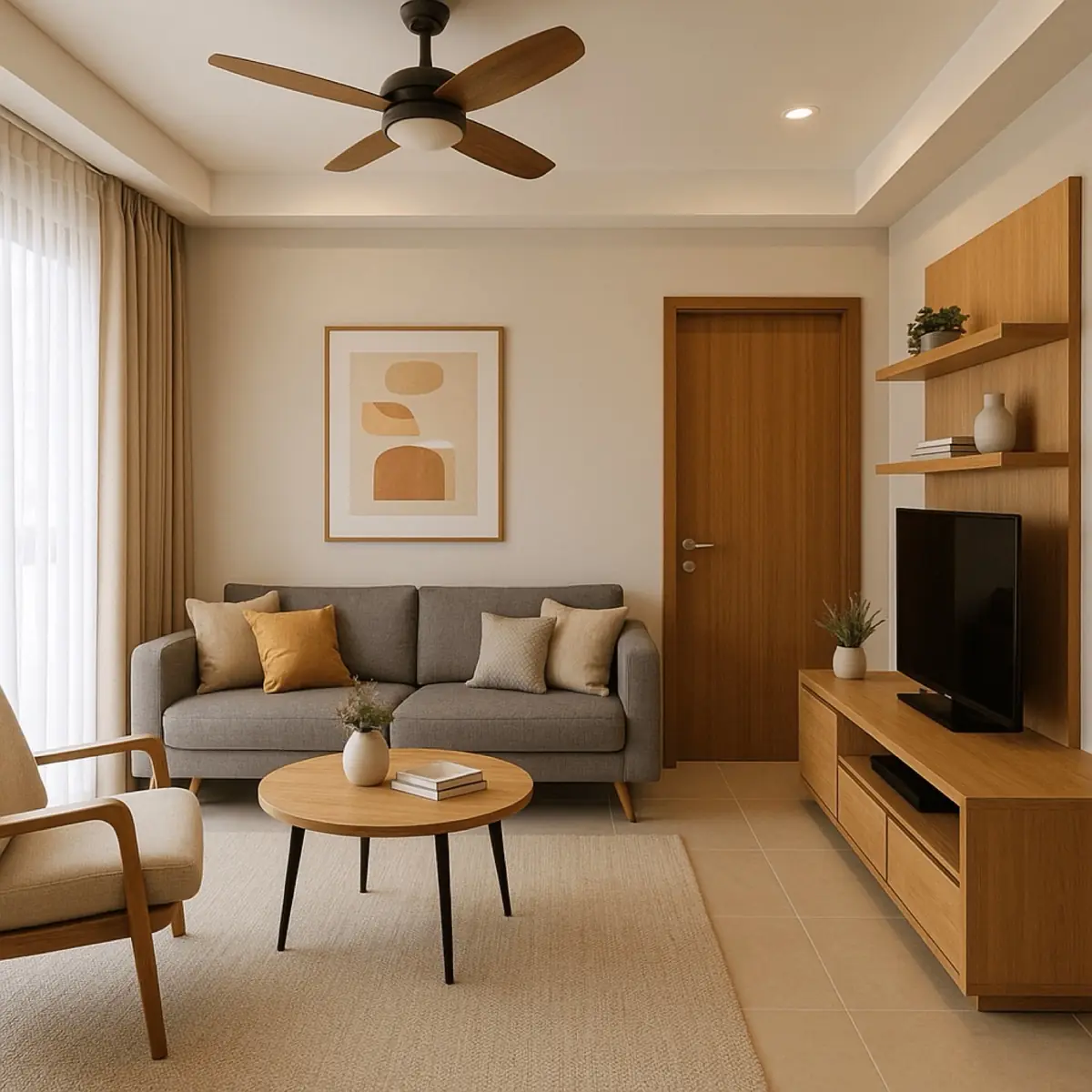
- Living room — this is where a layered or multi-level design earns its keep, because it's the room guests see and the one where you want the light to be adjustable.
- Bedrooms — keep it calm. A simple cove running around the room with warm concealed light is far better for sleep than spotlights aimed at the bed.
- Dining — a single dropped panel directly above the table, with a pendant hanging from it, defines the zone without a wall.
- Kitchen — go minimal and go washable. Grease and steam settle on ceilings, so avoid deep grooves and intricate mouldings that are hard to clean.
- Pooja room — a small recessed detail with soft warm light suits the space better than anything elaborate.
- Bathrooms and balconies — use a moisture-resistant board or a PVC/aluminium system, never plain gypsum.
The lighting advantage
False ceilings let you conceal wiring and integrate cove, profile and spotlighting — creating layered, ambient light that a plain ceiling can't. The practical rule is to plan the light before the plaster. Once the boards are closed, moving a spotlight means cutting the ceiling open again. Decide where you want to read, where you want to eat, and where you want the light soft, then let the ceiling shape follow those decisions. Warm white (around 2700–3000K) suits living rooms and bedrooms; a neutral white reads cleaner over kitchen counters and in study areas. Put the cove light and the spotlights on separate switches — a single circuit forces you to have all of it on or none of it.
Real benefits
Beyond looks, false ceilings improve acoustics, help conceal beams and ducts, and give rooms a finished, premium feel.
- Better lighting and ambience
- Improved acoustics
- A clean, high-end finish
What goes wrong — and how to avoid it
Almost every false ceiling complaint traces back to one of four things, and all four are avoidable at the planning stage.
- Hairline cracks at the joints — caused by rushing the jointing compound or skipping the joint tape. Proper taping and a full cure before painting is what prevents it.
- Water stains — a leaking slab or a sweating AC drain will show up on the ceiling long before you find the source. Fix the leak first; a ceiling is not a cover-up.
- No access panel — if a concealed AC unit, a water line or a junction box sits above the ceiling, insist on a removable access hatch. Without one, the only way in later is to break the board.
- Dark, cave-like rooms — usually from combining a deep drop with only downlights. Cove light bouncing off the slab is what keeps a layered ceiling from feeling heavy.
Planning, sequencing and living through it
Ceiling work comes early in an interior project, straight after electrical conduiting and before painting, flooring polish and furniture installation. That order matters: the framework has to go up before the walls get their final coat, because the joints need patching and sanding afterwards. It's dusty work, so plan to keep the room empty and sealed off while it happens. If you're doing a single living room in an occupied flat, expect the space to be out of use for the better part of a week between framing, boarding, jointing, curing and painting. Doing the whole home together is far less disruptive than room-by-room over several months.
Frequently asked questions
Is a false ceiling worth it?+
Yes — beyond aesthetics, it improves lighting and acoustics, conceals wiring and beams, and gives rooms a finished, premium look.
How much height does a false ceiling take away?+
A full box design typically drops the ceiling by six to nine inches once framing and boards are in. A peripheral or cove design only drops the edges, so the centre of the room keeps its full height — that's the better choice in rooms under about nine feet.
Gypsum or POP — which is better?+
Gypsum board is faster, cleaner to install and gives a very flat, crack-resistant finish, which is why it suits most homes. POP is better when you want curved or intricate custom shapes. For bathrooms, balconies and anywhere humidity is high, use a moisture-resistant board or a PVC/aluminium system instead of either.
Does a false ceiling need maintenance?+
Very little. Dust it when you clean the walls and repaint it along with the room every few years. The one thing to stay alert to is water — a stain means a leak above, and painting over it without fixing the source only delays the problem.
Can I install a false ceiling in a rented flat?+
It's possible but rarely sensible, because the ceiling stays with the property. In a rental, layered lighting with track lights, floor lamps and wall washers gets you most of the ambience without permanent work.