What Drives the Cost of Interior Design in Tirupati (2026)
“What will it cost?” is the first question every homeowner in Tirupati asks — and the honest answer is: it depends on the choices you make, not a fixed rate per square foot. Two identical 2 BHK flats near Leela Mahal Circle can land at very different figures purely because of the materials, finishes and scope each owner picks. This guide breaks down exactly which decisions move your budget the most, so you can plan with confidence and avoid the surprises that derail interior projects. For an exact, personalised figure for your home, our free estimator does the maths in about two minutes.
1. How much you do at once (scope)
The single biggest driver is simply how much of the home you take up in one go. A full-home interior — modular kitchen, wardrobes in every bedroom, a TV unit, false ceilings, painting and loose furniture — is a different order of investment from doing just the kitchen and one bedroom now and the rest later. Deciding your scope honestly, room by room, is the first and most important budgeting step.
2. The core material grade you choose
This moves the figure more than almost anything else, and it is where Tirupati's climate genuinely matters. The “carcass” (the hidden box behind every wardrobe and cabinet) can be built in commercial ply, boiling-water-resistant (BWR) ply, boiling-water-proof (BWP/marine) ply, or cheaper MDF and particle board. In a humid, warm region prone to termites, moisture-resistant BWR/BWP ply lasts far longer and resists swelling and pests — a slightly higher upfront choice that saves you from replacing warped units in a few years.
3. The finish on the surface
The outer finish you see and touch is a major cost lever, and it is entirely a style-and-budget decision. Laminates are the practical, hard-wearing everyday choice; acrylic and lacquered-glass give a high-gloss premium look; veneers bring natural wood warmth; and PU or duco paint finishes sit at the luxury end. You can mix them cleverly — a statement finish on the pieces that catch the eye, and durable laminate everywhere else — to get the look you want without finishing the whole home at the top grade.
4. Modular vs on-site carpentry
Factory-made modular units offer machine-precise finishing, better hardware and a cleaner site, while traditional on-site carpentry can be flexible for unusual spaces. Each suits different homes and budgets. What matters most for your figure is the hardware inside — soft-close hinges, tandem drawer channels and quality handles from reputable brands change both the daily feel and the cost.
5. False ceilings, lighting and electrical
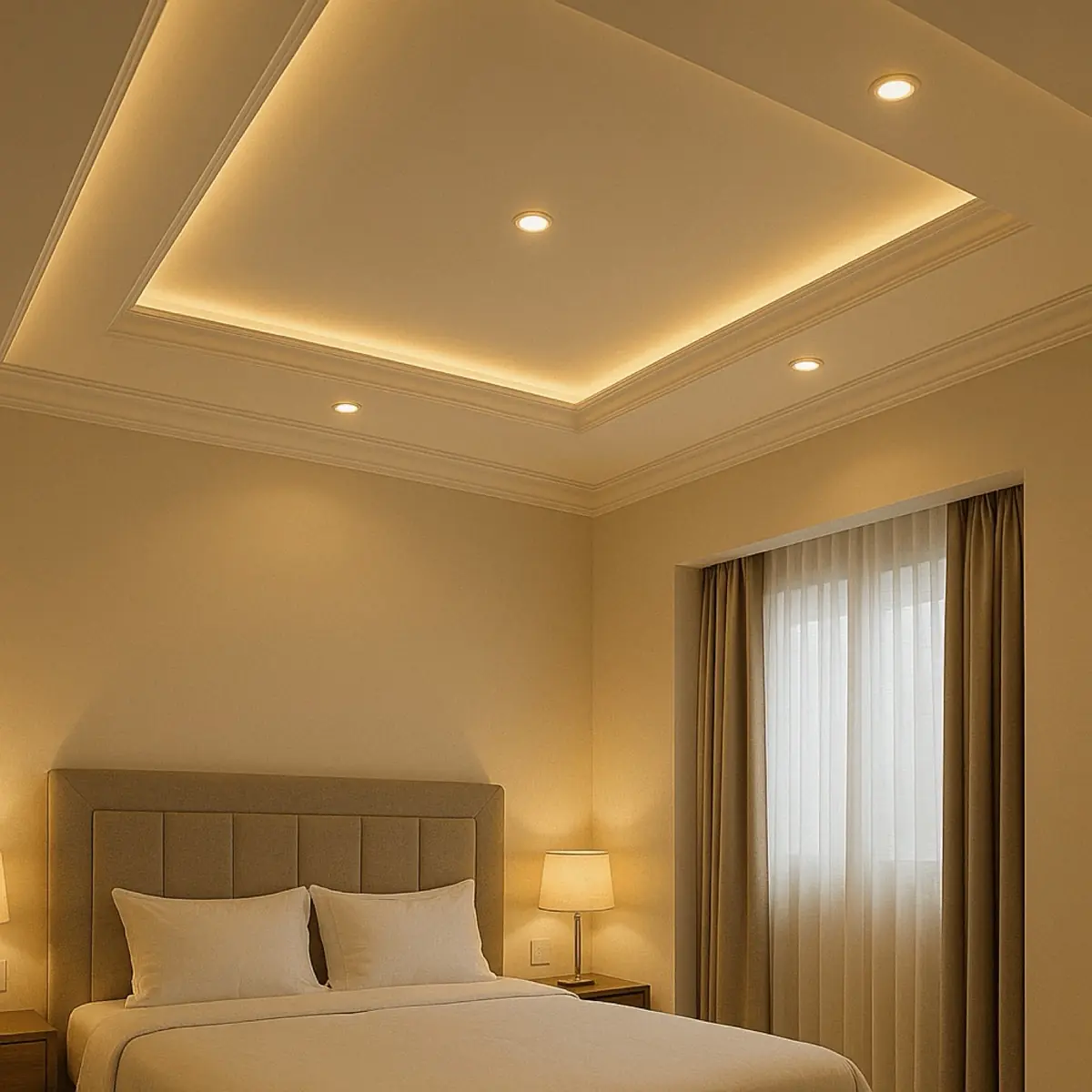
How much false ceiling you want — and how layered the lighting is — adds up quickly across a home. Profile lighting, cove lighting, spotlights and a well-planned electrical layout with enough points transform how a space feels at night, but each is an added scope item. Deciding where drama is worth it (living room, pooja room) and where a simple ceiling will do keeps this in check.
6. The kitchen — usually the biggest single item
The modular kitchen is almost always the most material- and hardware-intensive room in the house, so its specification has an outsized effect on the total. Countertop choice (granite, quartz), the tall units and pull-outs you add, chimney and appliance integration, and the shutter finish all stack up here. It is also the room where good moisture- and termite-resistant material matters most, given daily water and heat.
7. Loose furniture, decor and appliances
Beyond the fixed woodwork, sofas, beds, dining sets, curtains, rugs and appliances are a separate layer that people often forget when planning. You can phase these in over time, which is why we always separate fixed interiors from loose furnishings in a quote — so you see clearly what is essential now and what can follow.
8. Where to invest, and where to save
The smartest Tirupati budgets spend on the things that are hard or costly to change later — the kitchen, wardrobe carcass material, and electrical layout — and save on the things that are easy to upgrade over time, like decor, loose furniture and soft furnishings. Investing in moisture-resistant cores and good hardware is rarely a place to cut, because failures there are expensive to redo. Phasing the project room by room is a completely valid way to get the home you want within a comfortable budget.
Know your home interior cost in 2 minutes
Answer a few quick questions about your home and get a personalised estimate — free, no obligation.
Frequently asked questions
How is interior design cost calculated in Tirupati?+
There is no single fixed rate — the figure depends on your scope (how many rooms), the core material grade, the finishes you choose, the amount of false ceiling and lighting, and your kitchen specification. The best way to get an accurate number for your home is to use our free online estimator or request an itemised quote.
What is the best way to plan an interior budget?+
Decide your scope room by room, prioritise the items that are hard to change later (kitchen, wardrobe cores, electrical), choose moisture- and termite-resistant materials suited to Tirupati's climate, and phase the rest. Keeping fixed interiors separate from loose furniture makes the plan much clearer.
Can I do my interiors in phases?+
Yes. Many homeowners complete the kitchen and essential storage first, then add other rooms, false ceilings and loose furniture over time. A good designer will plan the wiring and layout up front so later phases fit seamlessly.